9/11 Anniversary: Family Shares Story

9/11 anniversary: Family shares its story

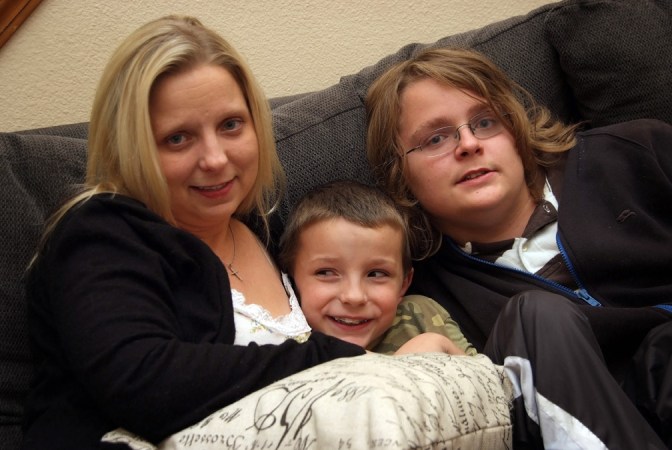
FORT CARSON, Colo. — “That’s a hamburger at Disney World,” said Melissa Givens, while auctioning her children’s toys and clothes online, a week prior to the 10th anniversary of 9/11.

For seven years, she has sold the past year’s novelties to fund family vacations to Disney World, a trip Jesse Givens promised before heading to combat in 2003.

Ten years ago, Melissa Givens was watching her husband weep in front of their television. Continue reading
Children of Fallen Honored at Carson

Event honors children of fallen

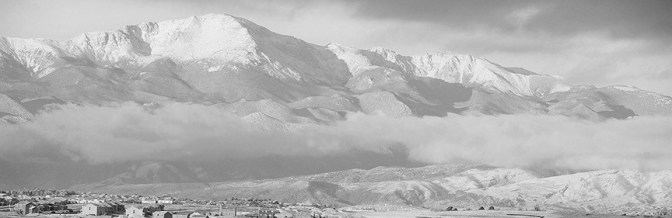
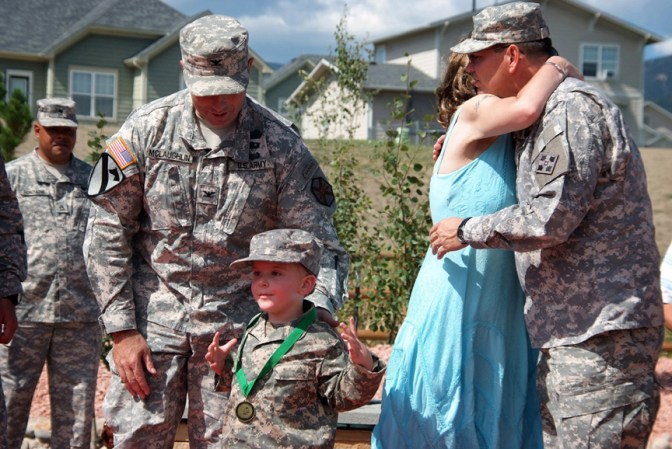
FORT CARSON, Colo. — Dozens of children, representing the loss of a parent in military service, gathered in a garden near the Rocky Mountain Front Range Aug. 22, where Army officers shook their hands and presented medals.

The summer morning marked the first medal of remembrance ceremony at Fort Carson, according to Army officials. The presentation culminated a recognition ceremony outside the Fallen Heroes Family Center, which opened last fall. Army leaders explained expanding support by the facility’s Survivor Outreach Services.

The Fort Carson medals were inspired by the Gold Medal of Remembrance for the Sons and Daughters of Our Fallen Act of 2011. Introduced in May, the legislation grants a national “Gold Medal of Remembrance” to the children of each service member who dies as a result of wounds, injuries or illnesses — retroactive to 9/11. Continue reading

DOD Reviewing Veteran Disability Ratings

DOD reviewing veteran disability ratings

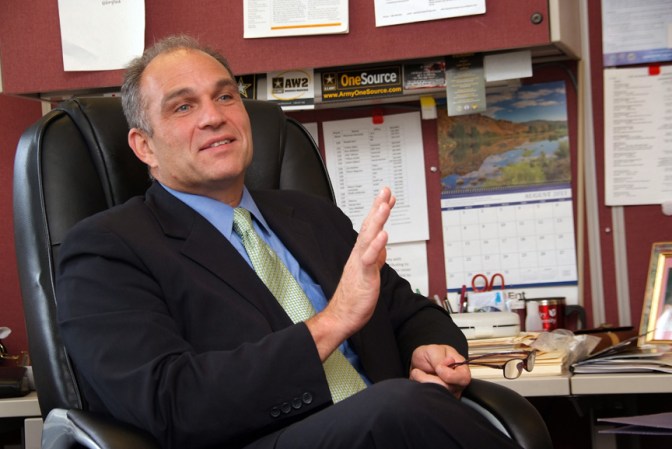
FORT CARSON, Colo. – Michael LoGrande, Physical Disability Board of Review director, visited Fort Carson Aug. 9 — the first stop in his nationwide attempt to offer the board to more than 70,000 injured veterans.

The PDBR was established “to review the disability determinations of covered individuals by Physical Evaluation Boards,” according to the Dignified Treatment of Wounded Warriors Act of 2008. The board began accepting applications in January 2009 from post-9/11 veterans with a disability rating of 20 percent or less.

About 25 percent of post-9/11 veterans reported a service-connected disability in July 2010, according to U.S. Labor Department statistics in March. Nearly a third had a disability rating less than 30 percent. The PDBR re-evaluates records for anyone who served in the armed forces between Sept. 11, 2001, and Dec. 31, 2009. Continue reading

Family Shares Hardships of DUI Death

Family shares hardships from DUI death

FORT CARSON, Colo. — “My son loved the Army — he loved being a soldier — and Fort Carson was his home,” said Nancy Clay, while standing at a podium in McMahon Auditorium July 15, facing her son’s former artillery unit.

“Seventeen months ago, my son was killed in the car you see laying out front,” she said. A flatbed tow truck dragged the mangled mess of twisted automobile parts, military attire and various papers onto the sidewalk outside. Her son died in the car last year, after the vehicle’s drunken driver swerved into an opposing lane.

Nancy Clay provided a two-hour presentation with two of her daughters, Jessica Clay, 22, and Megan Clay, 16. The family shared the life of Spc. Kale Clay, 3rd Battalion, 16th Field Artillery Regiment, 2nd Brigade Combat Team, 4th Infantry Division, which ended on Highway 115, near Fort Carson. Continue reading

Leno Brings Comedy to Carson

Leno brings comedy act to Carson

FORT CARSON, Colo. – Late-night talk show host Jay Leno let loose a series of stand-up comedy bits July 9, seizing his military audience with laughter.

“My abs are hurting right now; this is better than any [physical training] test,” said Pfc. Thomas Greiner, 4th Engineer Battalion, who sat near the front row during Leno’s monologue, which revealed humor in news headlines and everyday ironies for more than an hour.

“These people give their careers and everything for their country,” said Leno, prior to heading on stage. “So, coming and telling jokes, believe me, is an honor.” About 1,500 guests funneled into the Special Events Center, where they squeezed into bleachers and grabbed foldout chairs. Continue reading

Top War Fighters Unite at Warrior Games

Top war fighters unite at Warrior Games

FORT CARSON, Colo. — “The worst thing you can do to a warrior is take him out of his warrior tribe,” said Sgt. 1st Class Christopher Livesay of Dallas, Texas, a leg amputee and former Special Forces medical sergeant.

Competitions keep wounded warriors recovering by fueling their fighting spirit, said Livesay, who united with 17 other expert war fighters to form the first special operations team to compete in the Warrior Games, a joint effort by the Department of Defense and U.S. Olympic Committee.

About 200 veterans of war participated in the second annual Warrior Games May 16-21 in Colorado Springs. Soldiers, airmen, Marines, sailors and Coast guardsmen joined service-affiliated athletic teams to overcome limb amputation or dysfunction, spinal cord injury, traumatic brain injury and post-traumatic stress disorder. Continue reading

Habits kill creativity

old-world-map-shadow
Breaking habitual experiences propels creative processes. Countless people have interrupted their daily routines or completely reinvented themselves outside the familiarity of their homelands. Many of America’s most celebrated writers, artists and musicians lived in foreign countries, such as Ernest Hemingway, F. Scott Fitzgerald and Josephine Baker. These famous American expatriates submerged themselves in a strange collection of demographics, economics, political standards, legal procedures, social trends and unfamiliar traditions. Thomas Stearns Eliot, an American-born British poet, is arguably the most important English-language poet of the 20th century (Collins, 2009). Eliot became a British citizen at 39, while creating some of the best-known poems. When asked whether his works had a connection with his American past, Eliot said:

Yes, but I couldn’t put it any more definitely than that, you see. It wouldn’t be what it is, and I imagine it wouldn’t be so good; putting it as modestly as I can, it wouldn’t be what it is if I’d been born in England, and it wouldn’t be what it is if I’d stayed in America. It’s a combination of things (emphasis added). But in its sources, in its emotional springs, it comes from America. (Hall, 1959)

Continue reading

Colorado Hockey

Intro to American sports, hockey

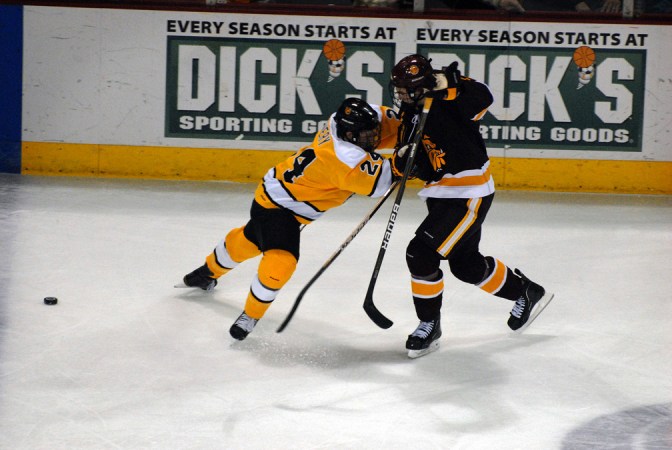
College ice hockey isn’t as entertaining as football overseas – known here as “soccer” – but that’s probably because I don’t completely understand the rules yet. There’s a lot of action in hockey, that’s for sure. I love how the players constantly change and everyone moves around at a fast pace. But if you don’t understand the rules, you’re like a deaf person in a musical: you see people moving around but you cannot hear the rhythm. I’m interested in learning about hockey to figure it out.

I could hear spectators screaming and commenting at the hockey players’ actions and the circling referees’ calls. During soccer, I jump up and down, sometimes swearing at the plays – my heart and mind is in the game. I find it easy to get overly excited, like I want to jump into the field. I see calls before their official announcements and, occasionally, I want to slap the referee. However I’ve never shouted “hit ‘em, hit ‘em” or “throw him into the glass,” like I heard inside the World Arena. Continue reading

Can Social Media Spread Democracy?

Social media is changing the way we learn about our world. The Internet-based communication networks are promoting freedom of speech. People are no longer passive readers, but rather engaging in news as a conversation on an international stage. Local and global societies are instantly collaborating, contributing, interpreting and interacting. The World Wide Web allows citizens to take ownership of public policy by reacting to issues that affect them. This literature reviews participation statistics, cultural implications and propaganda concerns as communities decentralize media and strive to democratize information online. Continue reading

Qatar’s expat experience

The daylight is blinding and the moist air somewhat suffocating. Frequent 110-degree Fahrenheit temperatures clash with heavy humidity. Hot, sandy breezes feel like standing in front of a filthy spinning turbine. For respite, residents rely on concrete air-conditioned homes, restaurants and shops. Those are typical and timeless summer conditions found in Qatar, a peninsula country protruding into the Persian Gulf.

I arrived in Qatar via Germany and Bahrain in July 2003, more than seven years ago. I had signed an employment offer with a defense contractor in Fort Worth, Texas, while living in Henderson, Nevada. The company staffed force protection positions at Camp Sayliyah, the forward-located headquarters for Central Command. The CENTCOM commander routinely met with reporters there to discuss war efforts in Iraq and Afghanistan. Continue reading